Showing posts with label How to Sell to Retail Stores. Show all posts

Wednesday, June 30, 2010

Selling Your Art to a Retailer Continued


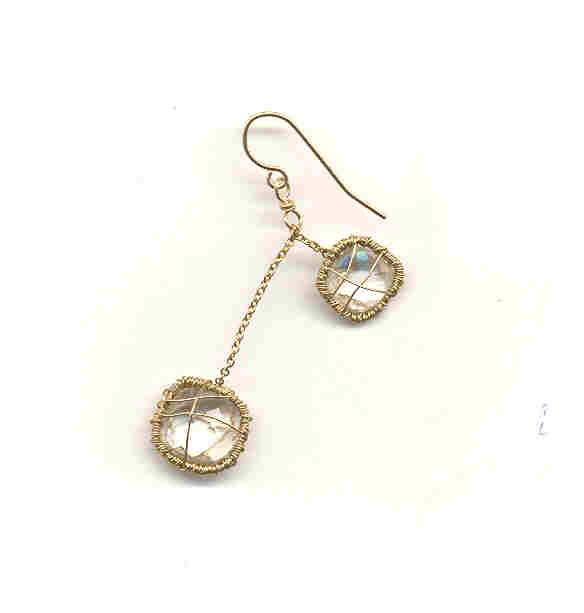
Chain designed by artist Laura Waldusky


This article is a continuation of my previous post about selling your artwork to a retail store. I interviewed Jennifer King, who is the Divisional Merchandise Manager for The Houston Museum of Natural Science. I tell all my artist clients that if they have not set foot in this store, they need to make a date to go. It reminds me of what the old Gump's looked like in the Houston Galleria (if anyone remembers this). They have an amazing collection of not only handmade artisan jewelry, but also some cutting edge designers like Alexis Bittar and Charles Albert. And they
carry the cool stuff from these artists - showpieces. The museum's clientele is stone savvy and many of them like to take risks, and their selections offer these undeniably original pieces.

I posted the picture above, because it represents a piece of work that Laura Waldusky made, an artist that I represent, and whose work is shown at the HMNS. This is a picture I shoot in my office, sent to Jennifer King and then got feedback from her. This part of the job is really the best. Collaborating with artists, taking the information from the buyer, and then interpreting it for the artist. It is not every retail store who will let an artist have free reign to just "work their magic." And I wish more would take this approach, because look what it yields? And the bezel Laura created on this is CRAZY-good. And all done by hand.


So you have a little more information about what the museum carries and how they work with artists. Now let's get to it! Last post I wrote about what Jennifer thought were the 10 really important things to do before you try to sell to a retailer. Always wanting to start with the positive, today I wanted to help you focus on what NOT to do.


1) Do not be a pest. Buyers are bombarded with product submissions - it takes time to go through everything. Constant phone calls and emails will not speed up the process and will just irritate the person you're trying to make your customer.
2) Do not pop in to the store and expect the buyer to drop what they're doing and meet with you. It shows a disrespect for the buyer's time. Also, do not harass the sales staff about your product, about the buyer's whereabouts, etc. Basically, don't be a stalker.
3) Do not take rejection personally. Understand that buyers must make many decisions when looking at a line such as, does it fit into my store's image? Does it compete with my existing product? Are the prices too high (or too low) for my customers? Do I have Open-to-Buy dollars for this classification (Buyers work on a flowed budget - they may like your product but not have free funds for the line)? Am I expanding or narrowing this classification? These are business decisions that may have absolutely nothing to do with the quality and worth of your product.
4) Do not over saturate your market. Consider carefully where you want to sell your line and what products you want the store to carry. While I may carry some of the same lines as MFAH, I do not want the exact same product assortment. That lessens the line's impact. Be strategic and thoughtful about your product placement.


Speaking as a rep here. . . I have to really educate the artist about the above things. Sometimes they put undo stress onto me to call or keep bugging me. I know when to call for follow up, and when to leave people alone. Trust whoever you enlist to know the basic ebb and flow of business.


Touching on her point about over saturating the market, I cannot tell you how often someone tells me to call on the person right across the street from the store we have already sold to. You must remember to keep your first customers first, and to broaden your market further down the road. If someone can go across the street to buy your design, it does not hold much worth to the store that it is currently in.


Look for one more post about the RULES of retail. Following these will make or break you, I can promise you.

Thursday, June 24, 2010

Want to Sell Art to a Store? Top 10 Things To Do


An Example of Vandi Hodges' Collection currently at The HMNS

Since I am always interested in helping artists out, I thought I would interview a buyer who I know and respect and ask her expertise on how to get your handmade items into a store. Please pass this on to anyone who needs some guidance in this area, because it's HARD to know what to do.

My interview is with...drum roll please...Jennifer King, the Divisional Merchandise Manager for the Houston Museum of Natural Science. Jennifer has been with the HMNS for over fourteen years. She is in charge of several classifications including fashion jewelry, fine jewelry, giftware and home accessories. The HMNS is a multi-million dollar retailer with a main store of 6,000 square feet, and a special gem and mineral store that is 1,000 square feet, in addition to 3 satellite stores. It is one of the highest attended museums in the United States and welcomes over 2 million visitors a year.

All this being said, I have placed 4 artists at the HMNS. Two of them, Laura Waldusky and Vandi Hodges, have extensive collections presented at this venue. Buying handmade for the stores is obviously one of Jennifer's favorite parts of her job. She says she is constantly amazed at all of the talent and creativity out in the world.


An Example of Laura Waldusky's Collection at The HMNS

Here are her Top Ten Things An Artist Should Do in order to obtain a Wholesale Account at a Store like the HMNS:

1) Create your brand and decide what image you want your business to project. Retailers like lines that create a merchandising story. Your products should be immediately identifiable as your work and each product in the line should come together as a cohesive whole. Alexis Bittar is one artist who is absolutely brilliant at this. He has three separate lines that are released twice a year. While each of the separate lines has it's own unique look, the individual pieces work with any other piece in it's own line or in one of the other two lines.

2) Be your own cheerleader. Don't be afraid to talk up your press, awards, what stores you are currently in, and your accomplishments.


3) Identify your customer and who you want to sell to. What kind of store do you envision your products in? This step is part of your brand creation.


4) Invest in some professional (or professional looking) photography. Photos of your product create the first impression - make it a good one. Photos should be clear, uncluttered and show details. Everything should be on a simple white or neutral background. If you can't include something that shows the scale of the piece, you need to include measurements. If you can afford it, get multiple shots of your signature pieces.


5) Have a catalog or a line sheet with clear pictures, pricing, contact information (email address please), bio, and detailed product information. For me, a print line sheet along with a digital photo follow-up works best. My mailbox (real and virtual) is overflowing, but I eventually look at everything.


6) Be professional in your presentation. That means writing a clear and coherent letter or email that tells me about your product and why it would work for my store. Consider it like a job interview - you're selling yourself and your work.


7) Really analyze your pricing. Remember, you are pricing at wholesale, not retail. You need to pay for your time and materials and then factor in a 2.5 to 3 times mark-up on the retail end. Does that retail price match the perceived value of your product?


8) Research your target store. What do they sell? Can you envision your product there? Does the store already have something similar?


9) Respect the buyer's submission and contact guidelines. Some buyers work on the phone. Some, like myself, are email only for prospective vendors. Some may have a specific submission process. Don't expect an immediate invitation to come show the line in person. Send a reminder email (with photos!) in six months. Expect that you might never get a response. Buyers are overwhelmed and usually understaffed. We're not deliberately being rude, we simply can't give an individualized response to every product submission.


10) Expect that the process will take time. If you mailed me something last week, don't expect follow-up the following week. Likely the buyer is still wading through last month's submissions. If you send an unsolicited sample, don't expect to get it back. If you absolutely must have your unsolicited sample returned, include a postage paid box or envelope. Even then, you might not get it back.


I will be posting two more articles about the process of a selling to a store. Stay tuned for what not to do, along with things every artist should know about the RULES of retail before they sell merchandise to stores.


Hope you find this information helpful. Jennifer really wrote this...didn't she do an outstanding job?